The join lives in one person's head
Two tables, one correct path between them, and the only record of it is whoever built the warehouse.
Query Builder
A proper editor over every source you have connected, with autocomplete that has read your schema and a check that runs before your query does.
Revenue by Payment Method
1SELECT2 TO_CHAR (DATE_TRUNC ('month', o.order_date), 'Mon YY') AS MONTH,3 p.product_name,4 SUM(oi.total_price) AS revenue5FROM6 ecommerce.orders o7 JOIN ecommerce.order_items oi ON o.order_id = oi.order_id8 JOIN ecommerce.products p ON oi.product_id = p.product_id9WHERE10 o.status = 'fulfilled'11GROUP BY12 DATE_TRUNC ('month', o.order_date),13 p.product_name14ORDER BY15 DATE_TRUNC ('month', o.order_date) ASC,16 revenue DESC;Ask here...






















Two tables, one correct path between them, and the only record of it is whoever built the warehouse.
Nothing tells you the column is misspelled until the query comes back empty twenty seconds later.

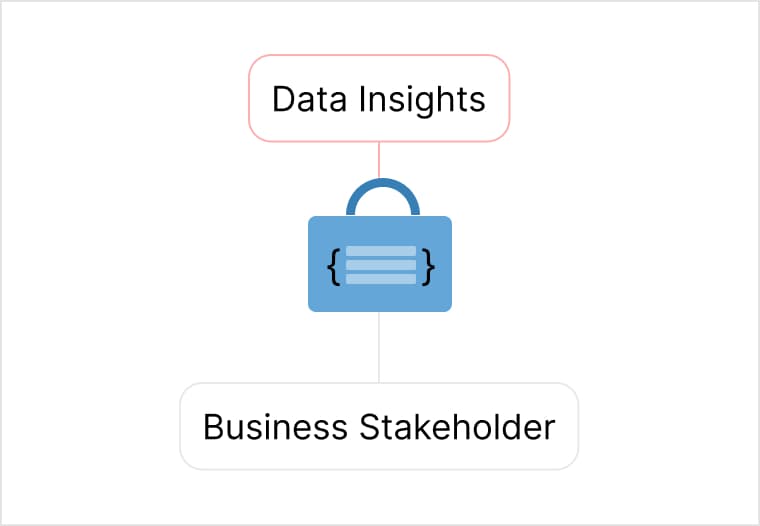
The right version of last quarter's query is in a chat thread, a notebook, or nowhere.
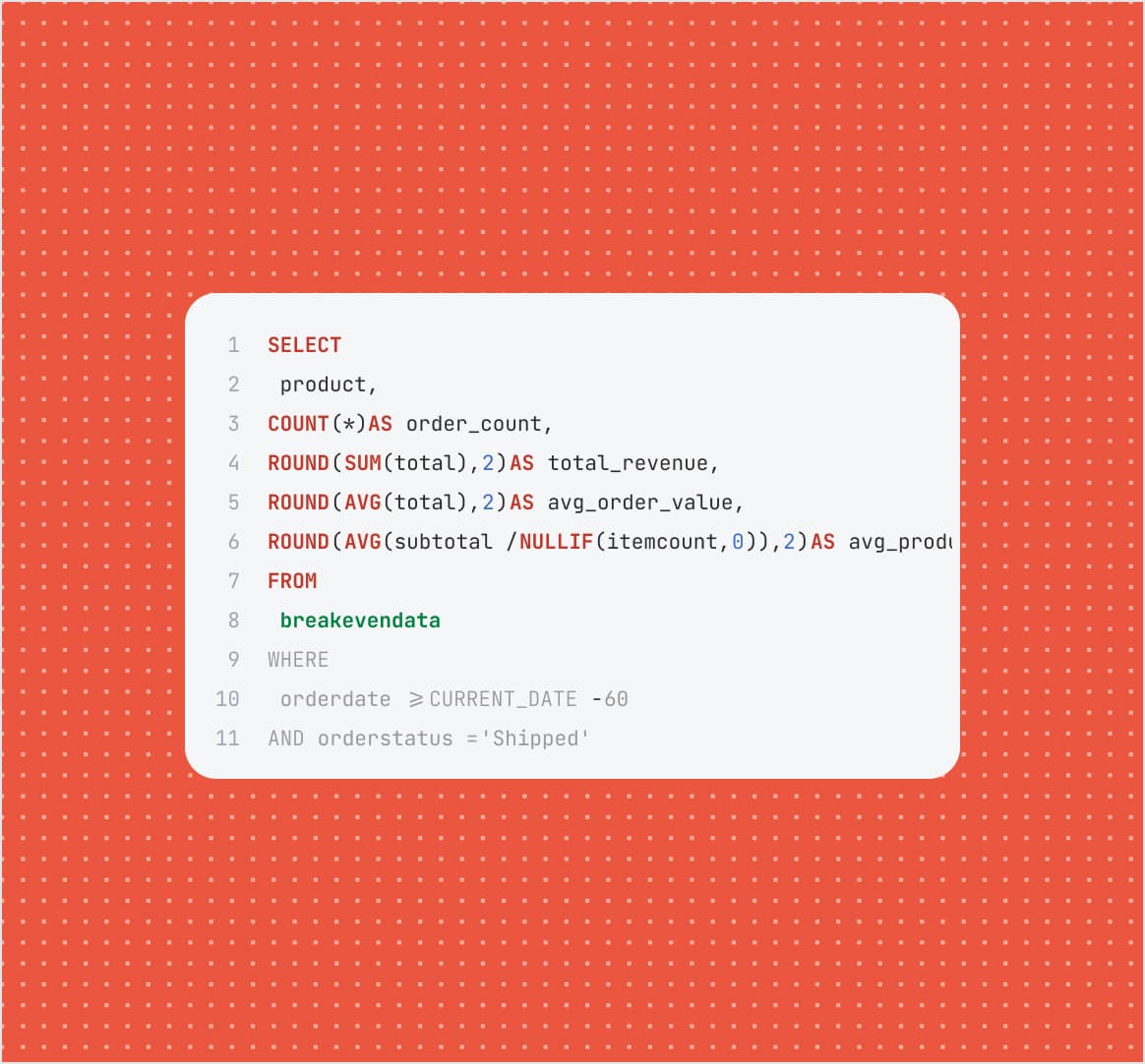
SQL for the query, Python when the answer needs more than SQL. One editor, over every source you have connected, with autocomplete that has read your actual tables and columns.
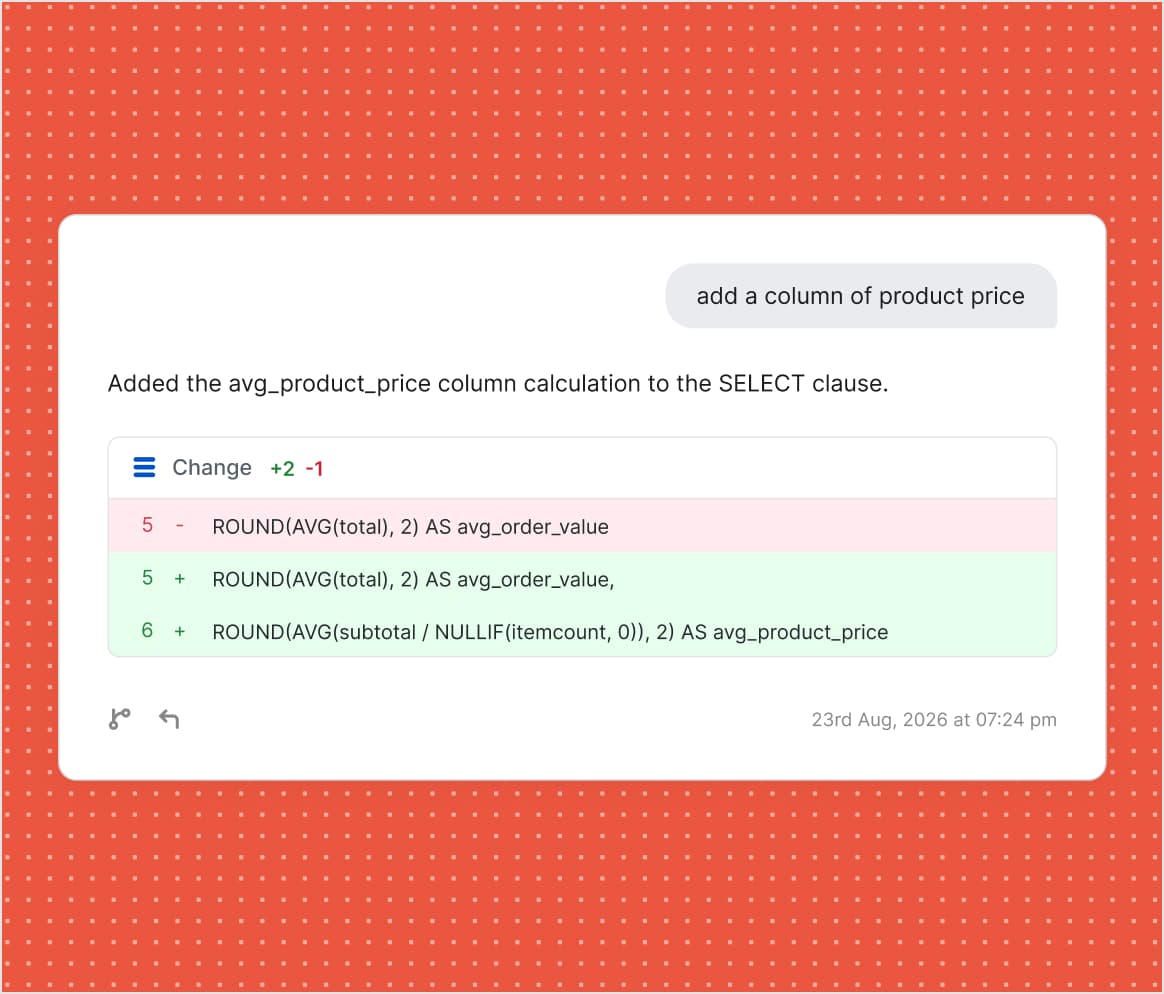
Say what the query should also do and the assistant proposes the edit as a diff — the removed line beside the added ones — so you approve a change you can read instead of a rewrite you have to re-check.
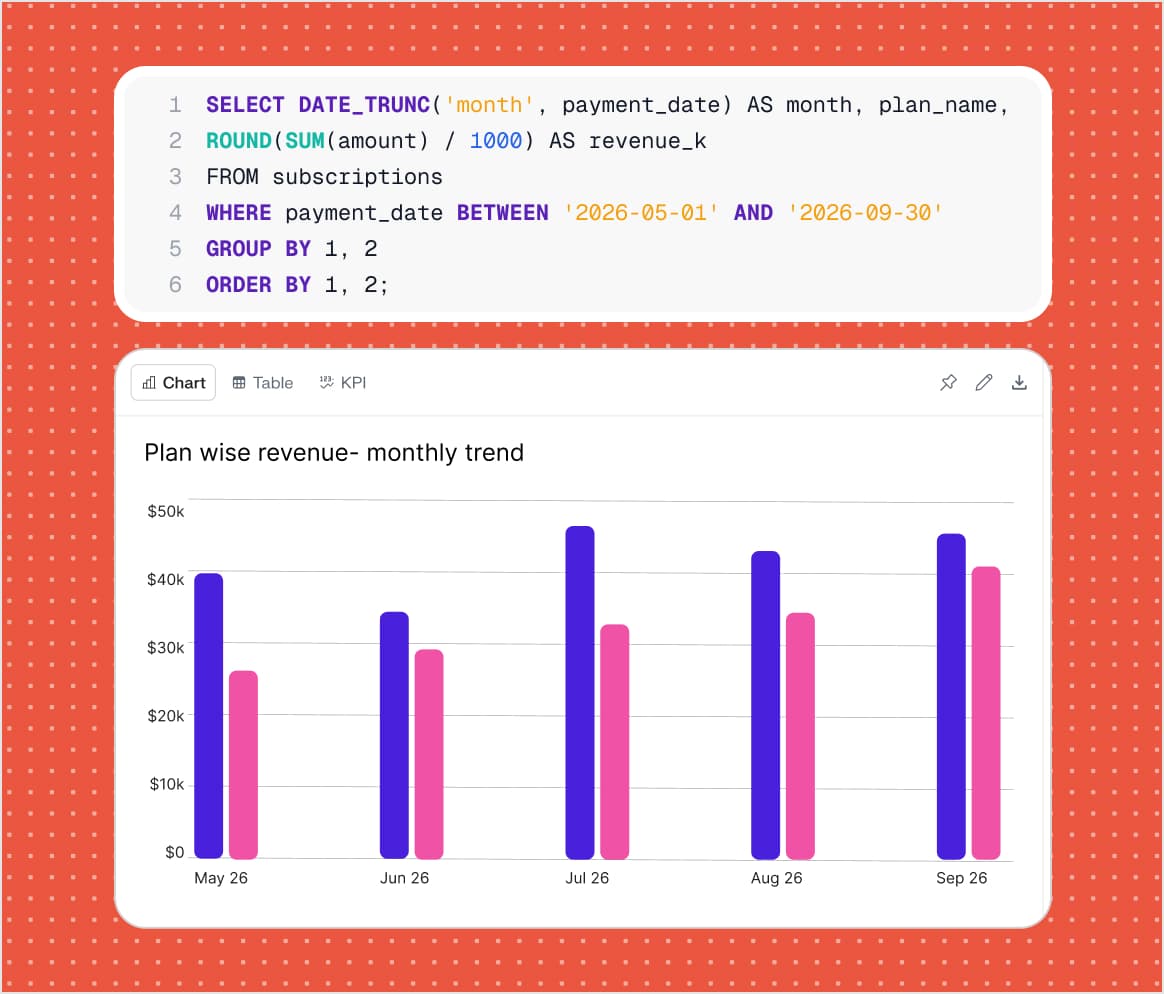
Switch the result to a chart or a KPI, pin it to a dashboard, or save it as a verified query the AI analysts reuse instead of writing their own.
Every database and business app in the catalogue, queried from one place.
No call with us: pick it, authorise it, query it.
Connecting a source is the only setup there is.
People who already write SQL and don't want to stop. Someone who doesn't write SQL can still read what you did, because the query and the result sit side by side.
Yes. SQL and Python both run in the same editor, against the same connected sources.
It completes what you are typing using your real tables and columns, and when you ask it to change the query it proposes the edit as a diff you approve line by line rather than rewriting the query under you.
A query you have saved and marked as correct. The AI analysts reuse it instead of writing their own, which is how a team's good SQL stops getting lost.
Anything you have connected. 124 sources connect without talking to us, out of a catalogue of 700+.
No credit card required. 14-day free trial.