

Agentic Analytics vs Traditional BI: Rethinking Decision Intelligence
Agentic analytics vs. traditional BI tools: one helps you understand past performance, the other helps you decide what should happen next. Here’s how the gap between insight and action is closing.

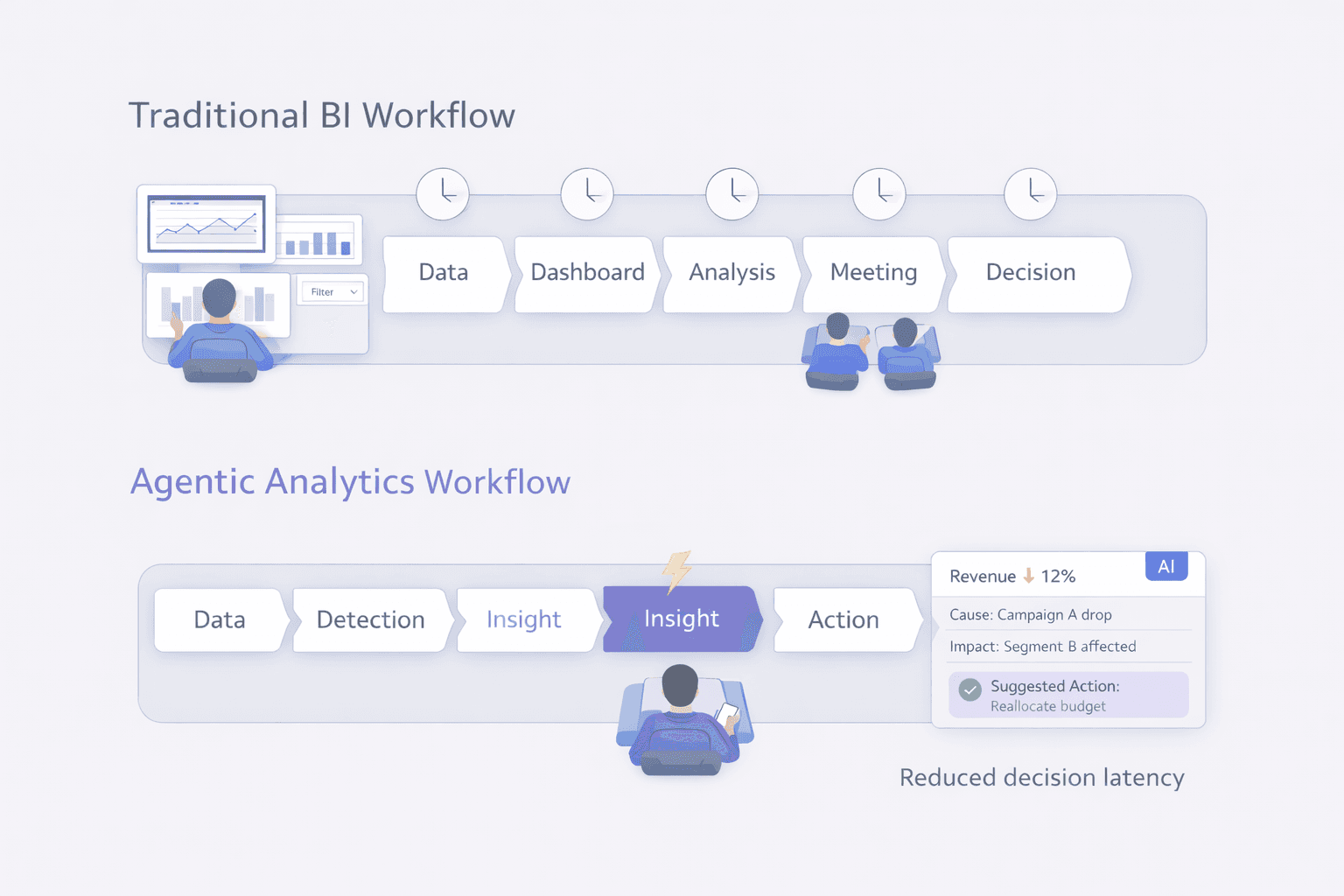
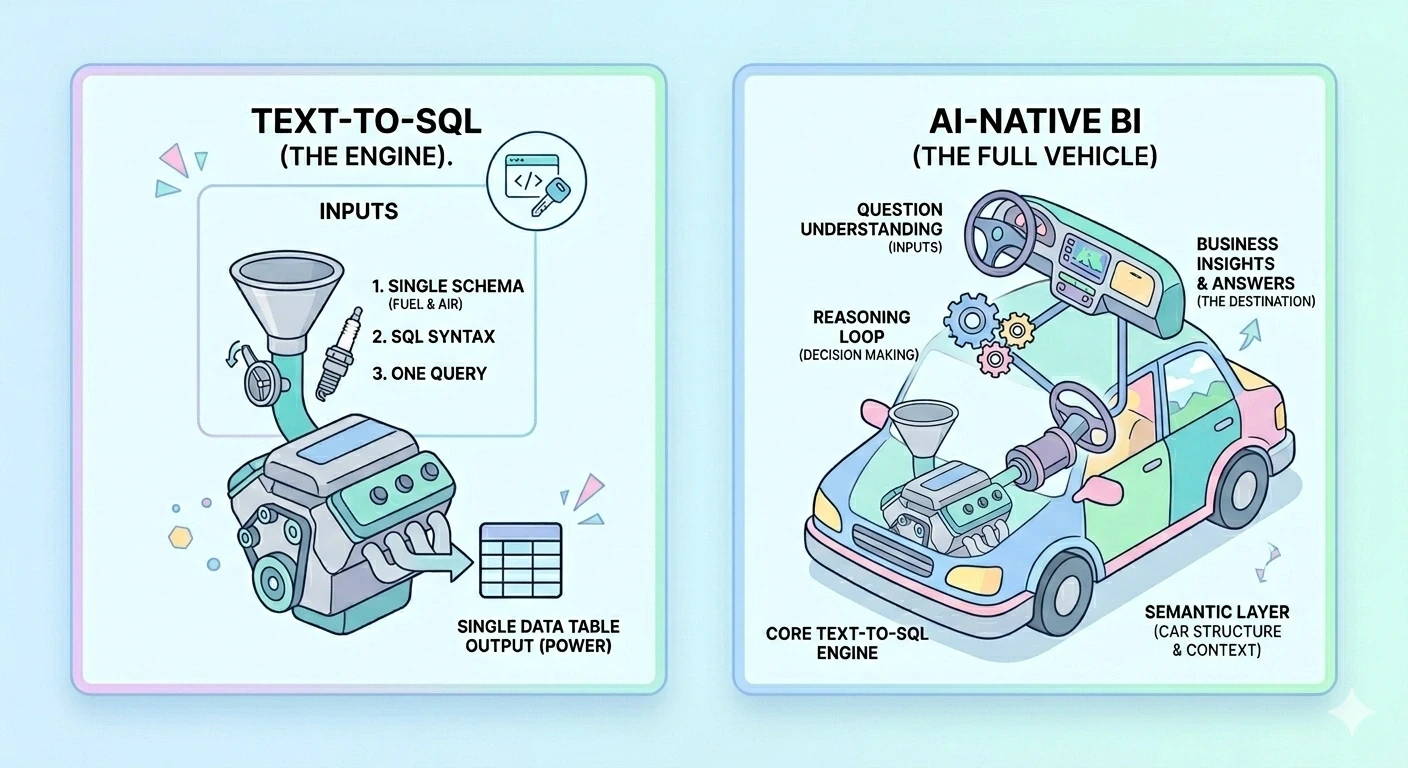
Agentic analytics vs. traditional BI tools comes down to one key difference: traditional BI helps you understand past performance, while agentic analytics helps you decide and act on what should happen next.
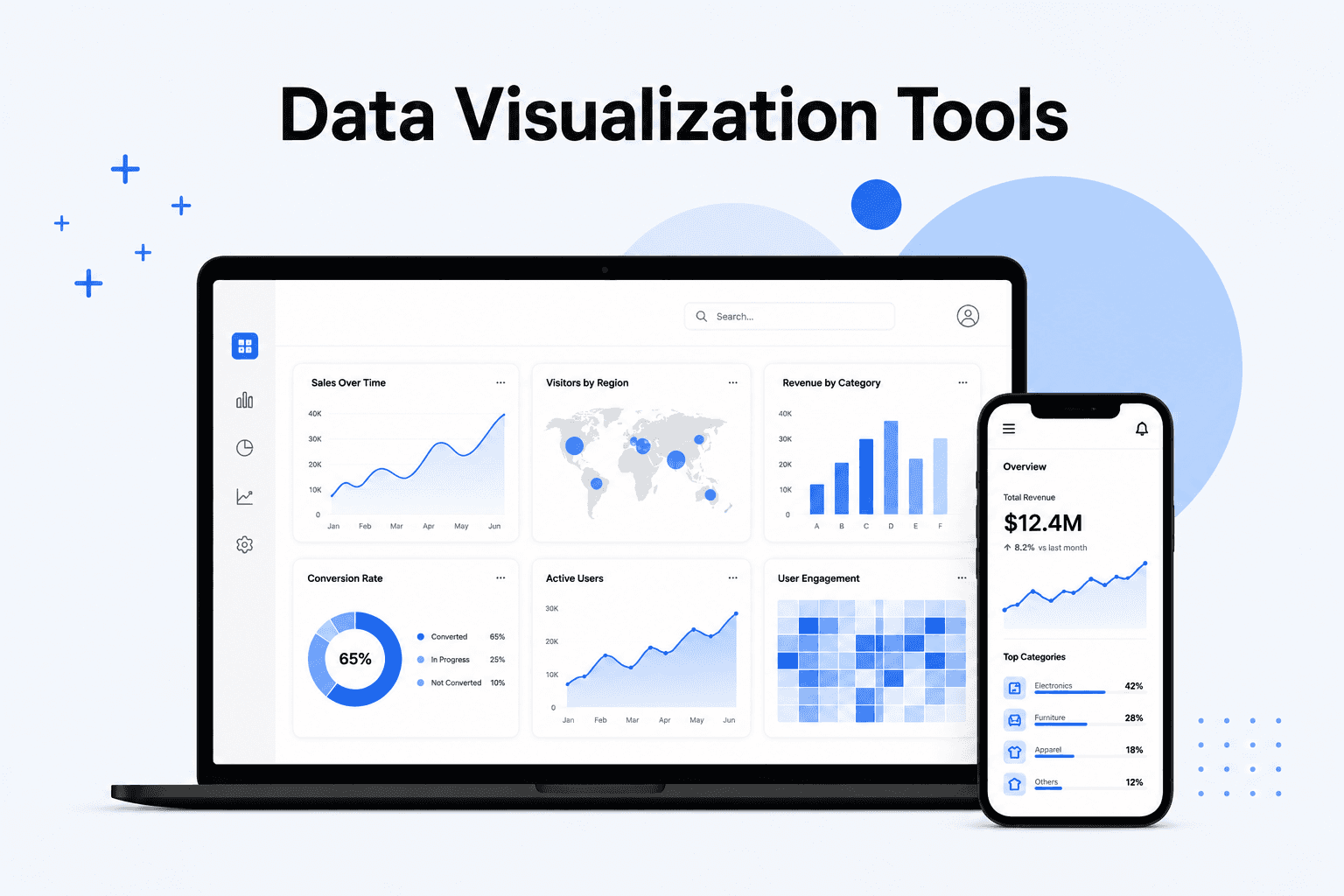
Traditional BI tools like Tableau and Power BI are designed for dashboards, reporting, and data exploration. They make it easier to track metrics and visualize performance, but they still rely on users to interpret insights and take action manually, which often slows down decision-making in fast-moving environments.
Agentic analytics takes a different approach. It uses AI-driven systems to continuously monitor data, detect changes, identify causes, and recommend or even trigger, actions based on defined goals. Instead of waiting for someone to analyze a dashboard, the system actively supports decision-making as data changes.
in practice, this means a BI dashboard might show that revenue dropped, while an agentic system can explain why it dropped, highlight affected segments, and suggest what to do next without requiring manual investigation. Industry analysts like Gartner describe this shift as a move toward decision intelligence, where systems don’t just report insights but actively help drive outcomes.
What Traditional BI Solves (and Where It Slows You Down)
Traditional BI was built for a world where visibility was the main challenge, and in many ways, it solved that problem really well. Teams can now centralize data, standardize metrics, and create dashboards that bring clarity across departments, which was a major step forward compared to fragmented spreadsheets and disconnected systems.
But when you look at how this plays out in real workflows, the limitations start to show up. Data is collected, cleaned, stored, visualized, and then finally analyzed by someone who understands the context. Each step adds value, but also introduces delay, especially when decisions depend on multiple people interpreting the same information.
From what we’ve seen in Reddit threads and LinkedIn discussions, the issue isn’t that dashboards are missing, it’s that they don’t close the loop. A dashboard might show that conversions dropped or revenue dipped, but it won’t explain why it happened or what action should be taken next. That responsibility still sits entirely with the team.
What Teams Are Actually Saying About BI Tools
When you step outside product pages and look at real user conversations, the tone is quite revealing. Many teams say they’ve built dozens of dashboards, but only a handful are actively used in decision-making. The rest become reference points rather than drivers of action.
Another pattern that shows up often is the dependency on analysts. Even in organizations that promote self-service BI, business users frequently need help interpreting data or validating what they’re seeing. This creates bottlenecks, especially in fast-moving environments where waiting even a few hours can impact outcomes.
These conversations highlight something important, the problem is no longer access to data, but the gap between insight and action. That’s exactly the gap agentic analytics is trying to solve.
The Data Behind the Frustration
What teams share in discussions isn’t just anecdotal, it’s backed by broader industry patterns that highlight the same underlying issues with traditional BI workflows.
Several studies and industry estimates suggest that a significant portion of dashboards go underutilized after they are built. In some cases, up to 60–70% of dashboards are rarely used beyond initial creation, which points to a disconnect between building analytics and actually using it for decisions.
At the same time, the cost of delayed decision-making is becoming more visible. Research from McKinsey & Company indicates that organizations adopting AI-driven decision systems are able to reduce decision latency and improve operational efficiency, especially in dynamic environments where timing directly impacts outcomes.
Taken together, these signals reinforce a simple idea: the challenge is no longer access to data, but the ability to act on it quickly and consistently. This is exactly where the shift from traditional BI to more agentic systems begins to make practical sense.
What Changes with Agentic Analytics
As we started exploring newer AI-driven systems, the shift felt less like an upgrade and more like a change in mindset. Instead of treating analytics as something you check periodically, agentic systems are designed to operate continuously in the background, monitoring data and responding to changes as they happen.
Rather than asking, “What happened last week?”, you define a goal like improving retention or optimizing revenue. The system then works toward that goal by tracking patterns, detecting anomalies, and surfacing insights without needing constant input. This changes the role of analytics from a tool you consult into something that actively supports how your business runs.
This is why the discussion around agentic analytics vs. traditional BI tools is gaining traction, it reflects a shift from query-based workflows to goal-driven systems.
From Insights to Actions: The Real Difference
The biggest difference becomes clear when you look at how each approach handles action. Traditional BI stops at insight, which means teams still need to interpret results and decide what to do next. Agentic analytics extends beyond that by connecting insights directly to recommendations or even automated workflows.
In practical terms, if sales drop, a traditional dashboard will highlight the decline, but an agentic system can go further by identifying possible causes, analyzing impacted segments, and suggesting corrective steps. In some cases, it can even trigger alerts or actions automatically, reducing the delay between detection and response.
According to Gartner, this shift represents a broader move toward decision intelligence, where analytics systems are expected not just to inform decisions, but to actively support them.
The Hidden Cost of Delayed Decisions
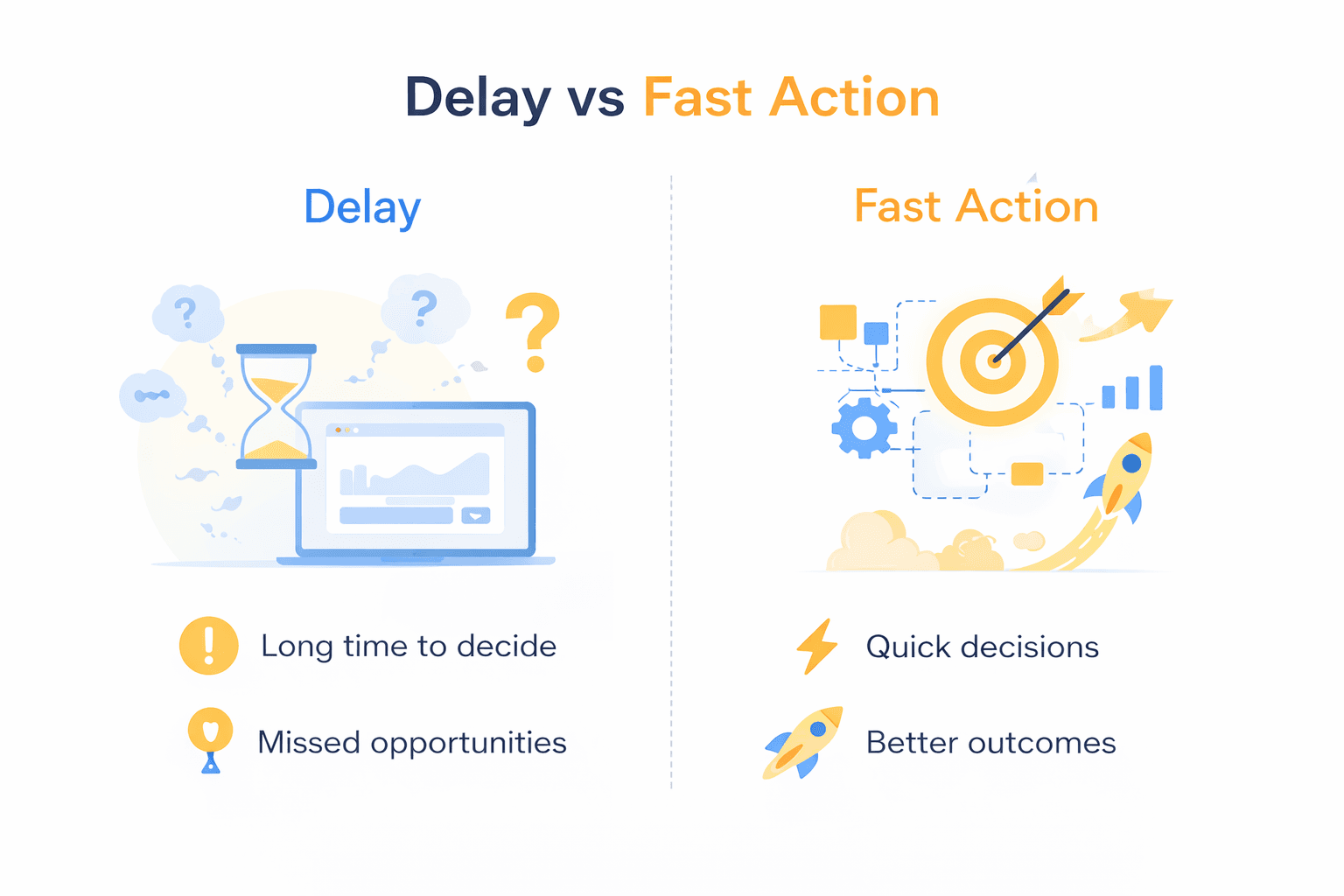
One insight that consistently comes up in real-world discussions is something most teams don’t explicitly measure, the cost of delay. A dashboard might technically provide the right information, but if it takes too long to interpret and act on it, the opportunity is already lost.
Marketing teams, for example, often notice performance drops in dashboards but take hours or days to identify the root cause and respond. By that time, budget inefficiencies or missed opportunities have already impacted results.
This is where agentic analytics vs. traditional BI tools becomes a practical decision rather than a conceptual one. It’s not just about what each system can do, but how quickly it enables action when it matters.
Why Most Teams Are Moving Toward a Hybrid Approach
Interestingly, very few teams are looking to completely replace traditional BI. Most discussions suggest a hybrid model, where BI continues to provide structure and reporting, while agentic systems handle monitoring and real-time decision support.
This balance makes sense because different functions have different needs. Finance and compliance teams still require structured reporting and auditability, while growth and operations teams benefit more from systems that can respond dynamically to changes.
We’re starting to see this reflected in newer platforms as well. Tools like Supaboard are exploring this middle ground, combining familiar dashboard experiences with more proactive, AI-driven capabilities that help reduce manual effort without removing visibility.
Where Analytics Is Headed Next
If you zoom out, the evolution of analytics follows a clear pattern. It started with descriptive systems that helped teams understand what happened, then moved into predictive models that forecast what might happen next. Now, with agentic analytics, we’re entering a stage where systems start influencing what should happen.
This progression reflects a shift in expectations. Businesses no longer want to just analyze data, they want systems that help them react instantly and continuously optimize outcomes. As AI capabilities continue to improve, this expectation will likely become the norm rather than the exception.
What This Means for Teams and Organizations
For organizations, this shift means faster decisions, less reliance on manual analysis, and the ability to operate more dynamically. Instead of waiting for reports or periodic reviews, teams can respond to changes in real time, which creates a significant competitive advantage.
For teams, the impact is just as important. Analysts spend less time building and maintaining dashboards, and more time focusing on strategy and deeper insights. Data teams move toward building intelligent systems rather than static reporting layers, while leaders gain access to insights that are both timely and actionable.
Bridging the Gap Between BI and Agentic Analytics
As teams start moving beyond static dashboards, one pattern becomes clear: most organizations aren’t looking to completely replace their BI stack, they’re looking to extend it. They want to keep the visibility and structure that BI provides, while adding a layer that helps them move faster and act with more confidence.
This is where newer platforms like Supaboard are starting to feel relevant. Instead of forcing a trade-off between dashboards and automation, they aim to combine both, allowing teams to explore data visually while also leveraging AI to surface insights, detect changes, and guide next steps without constant manual effort.
In practice, this means you’re not abandoning familiar workflows. You’re augmenting them. Teams can still build and share dashboards, but they’re no longer limited to checking them periodically. The system becomes more proactive, helping ensure that important signals don’t go unnoticed and that decisions don’t get delayed.
For teams exploring the shift from traditional BI to more agentic systems, this kind of approach often feels like a more practical starting point, evolving the way analytics works, rather than replacing it entirely.
Final Thoughts
Traditional BI tools played a crucial role in helping organizations become data-driven by making information accessible, structured, and reliable. But as the pace of business increases, visibility alone is no longer enough.
Agentic analytics builds on that foundation by reducing the gap between insight and action, allowing systems to not just report on data but actively support decision-making. The shift is subtle but significant, you move from checking dashboards to working with systems that continuously analyze, adapt, and respond.
That’s ultimately why the conversation around agentic analytics vs. traditional BI tools matters. It’s not just about choosing a better tool, but about adopting a model that aligns more closely with how modern teams need to operate.