

What Is a Transportation Management System (TMS)? Benefits, Features & How to Choose
Learn how a TMS system reduces logistics costs, improves delivery performance, and gives real-time visibility. Includes features, use cases, and buying guide.


60% of dispatch time spent on coordination, that’s not a scaling problem, it’s a system problem.
In conversations with a transportation company, one pattern stood out: before adopting a Transportation Management System (TMS), most of the team’s time was consumed by spreadsheets, calls, and fragmented updates across systems. As operations grew, complexity increased—but visibility didn’t.
This isn’t an isolated issue. Routing inefficiencies alone can increase freight costs by 10–15%, while limited visibility contributes to nearly 20% of delivery delays.
Once a centralized TMS dashboard was introduced, the shift was immediate. Teams moved from reactive firefighting to structured, data-driven execution. Dispatch became faster, routing errors dropped, and real-time tracking replaced constant follow-ups.
For operations leaders, the goal isn’t adopting new software—it’s gaining control over costs, improving delivery reliability, and building a system that scales.
What Is a Transportation Management System (TMS System)?
A Transportation Management System (TMS) is a logistics platform that uses technology to help businesses plan, execute, and optimize the movement of goods across the supply chain, both inbound and outbound. It ensures shipments are compliant, properly documented, and delivered on time.
Often part of a broader Supply Chain Management (SCM) ecosystem, a TMS provides visibility into daily transportation operations, including carrier selection, route optimization, and shipment tracking. It also centralizes trade compliance information and documentation, reducing manual effort and improving accuracy.
Transportation management software streamlines shipping processes across all modes—road, air, and sea—making it easier for businesses to manage costs, improve efficiency, and maintain reliable delivery performance.
Why Do Businesses Need Transportation Management Software?
Logistics has become more complex—more shipments, more partners, tighter delivery timelines. Without the right system in place, managing all of this manually quickly leads to inefficiencies, higher costs, and poor visibility. This is where transportation management software (TMS) becomes essential. It helps businesses streamline operations, reduce errors, and make faster, data-driven decisions.
Gartner defines transportation management systems (TMSs) as software that supports multimodal sourcing, planning and execution of the physical transport of goods across the supply chain. It allows a shipper to manage varying levels of transportation complexity across multiple transport modes and geographic regions. TMS solutions are utilized by shippers of differing sizes, operational complexities, industries and geographic locations.
Challenges Without a TMS System in Logistics Operations
Without a TMS system, logistics teams rely heavily on spreadsheets, emails, and manual coordination. This creates several problems:
Limited visibility into shipment status
Frequent routing errors and delays
High dependency on manual dispatching
Difficulty tracking carrier performance
Lack of real-time updates for customers
As operations scale, these issues compound, making it harder to control costs and maintain service quality.
Benefits of Using Transport Management Software (Cost, Efficiency, Visibility)
A transport management system directly addresses these challenges by bringing structure and automation:
Cost Reduction: Optimized routes and better rate comparisons lower freight expenses
Operational Efficiency: Automation reduces manual workload and speeds up dispatching
Real-Time Visibility: Track shipments, delays, and performance in one place
Better Decision-Making: Access to data helps identify inefficiencies and improve planning
Instead of reacting to problems, teams can proactively manage logistics.
How TMS Improves Delivery Performance and Customer Satisfaction
A well-implemented Transportation Management System (TMS) improves delivery performance by bringing real-time visibility, structured workflows, and better control over execution. Teams can track shipments live, identify delays early, and take corrective action before issues escalate. Instead of reacting late, operations become proactive—routes get optimized, carriers stay aligned, and exceptions are handled faster.
This directly leads to:
Higher on-time delivery rates
Fewer failed or missed shipments
More accurate and predictable delivery timelines
Clear, real-time communication with customers
As reliability improves, customers receive consistent updates and fewer surprises. Over time, this builds trust, strengthens relationships, and creates a better overall delivery experience.
Key Features of Transportation Management Software
Modern TMS platforms use dashboards to turn raw logistics data into actionable insights.
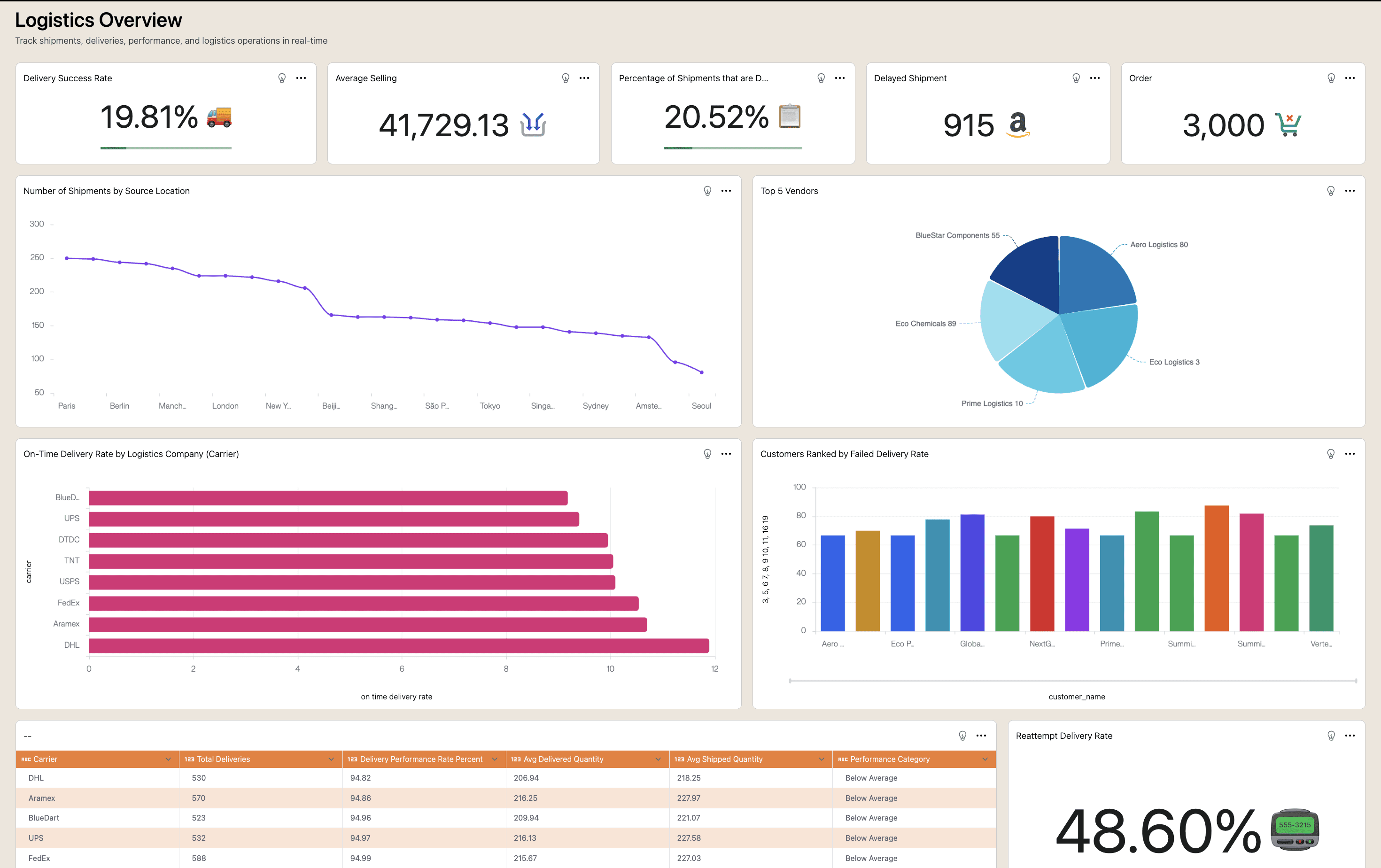
Transportation management software brings structure and control to logistics by centralizing planning, execution, tracking, and analysis. It helps businesses reduce costs, improve delivery efficiency, and gain real-time visibility across shipments, carriers, and operations.
Shipment Planning and Route Optimization in TMS Software: Plan shipments efficiently by selecting optimal routes, consolidating loads, reducing fuel costs, minimizing delays, and improving overall delivery speed and reliability.
Real-Time Shipment Tracking and Visibility Tools: Track shipments in real time using GPS and system integrations, enabling instant updates, proactive issue resolution, and complete visibility across logistics operations.
Carrier Management and Vendor Performance Tracking: Monitor carrier performance, compare vendors, track delivery success rates, ensure compliance, and make data-driven decisions to improve logistics partner efficiency and reliability.
Analytics and Logistics Dashboard (TMS Dashboard Overview): Analyze logistics data through dashboards, track key metrics, identify trends, measure performance, and gain actionable insights to optimize transportation operations effectively.
Automation and Workflow Management in Transport Software: Automate dispatching, documentation, approvals, and workflows to reduce manual effort, eliminate errors, speed up operations, and improve overall logistics efficiency.
How to Choose the Right TMS Software for Your Business
Selecting the right transportation management system (TMS) is less about features and more about fit. The right platform should align with your logistics complexity, integrate with your existing systems, and deliver clear improvements in cost, visibility, and execution.
Key Factors to Consider (Cost, Scalability, Integrations)
Start by evaluating total cost—not just licensing, but implementation, training, and maintenance. Look for a system that scales with your shipment volume and supports future growth. Strong integration capabilities with ERP, WMS, and carrier systems are critical to avoid data silos and ensure smooth operations.
Cloud-Based vs Enterprise TMS Decision Guide
Cloud-based TMS software works well for businesses that need quick deployment, flexibility, and real-time access across teams. Enterprise TMS solutions suit organizations with complex logistics networks that require deep customization, advanced optimization, and tight integration with existing infrastructure.
Questions to Ask Before Selecting a Transportation Software
Before choosing a TMS system, ask practical questions:
Will this reduce manual workload and errors?
Can it integrate with current systems easily?
Does it provide real-time visibility and actionable insights?
How quickly can the team adopt and use it effectively?
The right answers will point to a solution that delivers real operational impact, not just features.
Real-World Use Cases of Transportation Management Software
From Manual Reporting to Real-Time Logistics Insights
A US-based logistics team managed reporting manually across spreadsheets, emails, and disconnected systems. Generating a single performance report often took 4–6 hours, with teams pulling data from multiple sources and reconciling inconsistencies. This delay wasn’t unique, industry studies show that over 50% of logistics teams rely on manual reporting, which slows decision-making and increases error rates. On top of that, poor data visibility contributes to 15–25% operational inefficiencies in supply chain processes.
After moving to a centralized system, all logistics data was unified into a single source of truth. Reporting that once took hours became instant, with dashboards updating in real time. Studies indicate that companies adopting centralized analytics reduce reporting time by 60–80% and improve operational visibility by over 70%.
The biggest shift came with interactive dashboards and AI-driven querying. Teams could ask questions like “Which routes are causing delays?” or “What’s driving cost increases?” and get immediate answers. This aligns with broader trends, organizations using real-time analytics see up to 20–30% faster decision-making and measurable improvements in delivery performance. What once took hours now takes seconds, allowing teams to focus on optimization instead of data collection.
Here’s an example of how a modern logistics dashboard looks in practice.
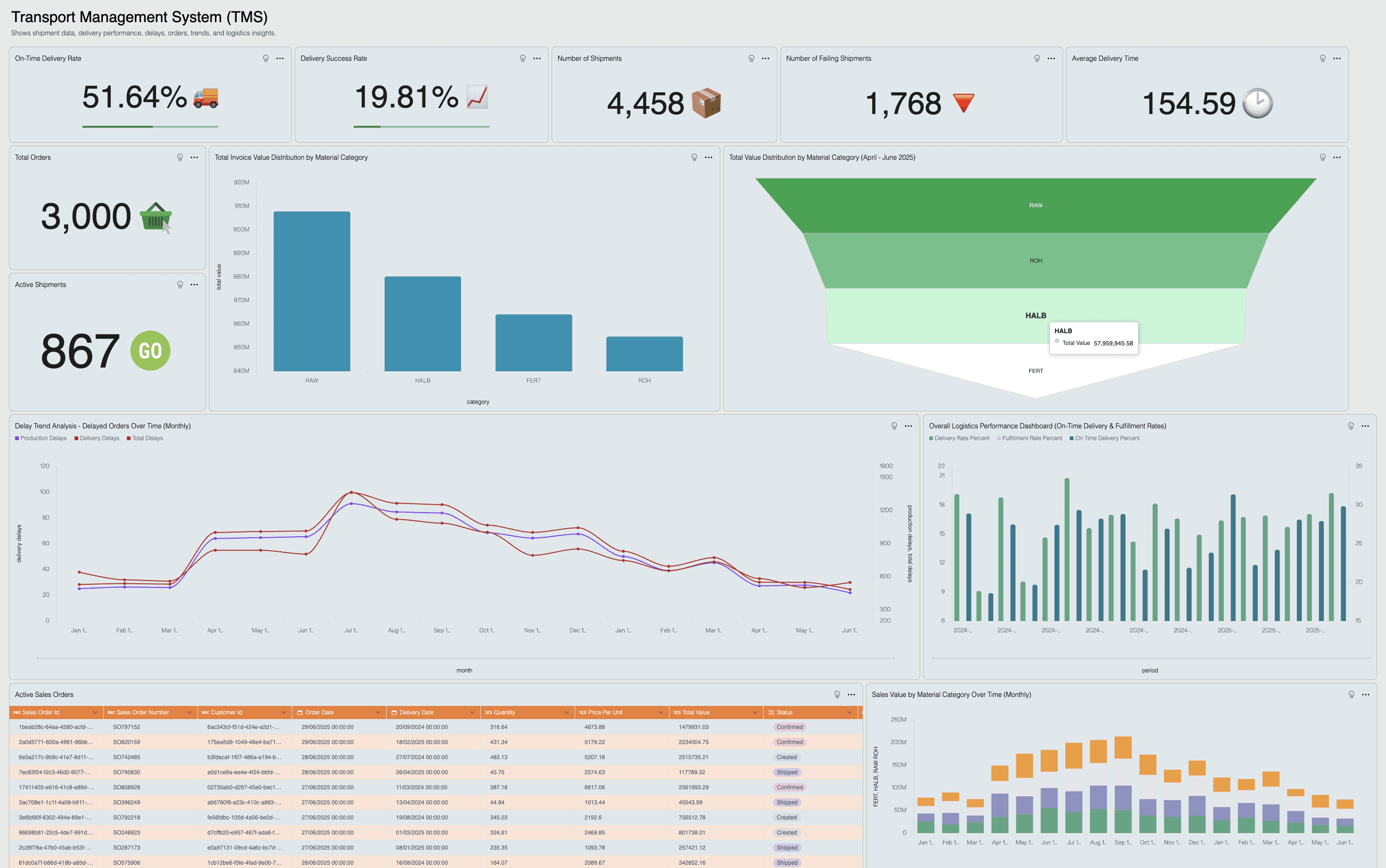
Example of a centralized logistics dashboard showing real-time shipment insights, cost analysis, and performance tracking.
Want to turn your logistics data into real-time, decision-ready dashboards?
Try Supaboard to visualize shipments, costs, and performance, without manual reporting.
Conclusion
Logistics challenges today aren’t caused by scale—they’re caused by lack of visibility and control.
As logistics operations grow more complex, a transportation management system becomes critical for planning, executing, and optimizing shipments with full visibility and control. By reducing manual effort and improving efficiency, it enables businesses to streamline operations, lower costs, and deliver consistent, reliable performance across the supply chain.
The real question isn’t whether you need a TMS, it’s how long you can afford to operate without one.