

Best Omni Alternative to Apache Superset
Looking for an omni alternative to Apache Superset? Compare embedded analytics platforms, limitations of Superset, and modern BI options for SaaS and enterprises.


A Practical Guide to Modern Embedded Analytics Platforms
As analytics requirements evolve in 2026, many organizations are actively searching for an omni alternative to Apache Superset. While Superset remains a capable open-source BI tool, growing demands around usability, embedded analytics, AI-driven insights, and enterprise scalability are pushing teams to evaluate more comprehensive analytics platforms.
This guide explains why teams move beyond Apache Superset, what an omni analytics platform actually means, and which Apache Superset alternatives are best suited for modern SaaS and enterprise use cases.
Written for SaaS, healthcare, and enterprise analytics teams evaluating Apache Superset alternatives in 2026
Why Teams Are Searching for an Omni Alternative to Apache Superset
Apache Superset is widely adopted for internal business intelligence due to its open-source flexibility and strong SQL-based exploration. However, as analytics becomes more central to products and decision-making, Superset often becomes harder to scale and maintain.
Importantly, teams are not abandoning Superset due to direct competition from Omni or similar platforms. Instead, the shift is driven by operational complexity, usability gaps, and enterprise limitations that emerge as analytics needs grow.
Common reasons organizations look beyond Superset include:
Steep learning curve for non-technical users, often requiring SQL knowledge and engineering support
Lack of pixel-perfect or print-ready reporting, which is critical for finance, compliance, and regulated industries
Complex embedding and multi-tenant implementations, especially for SaaS products
No official enterprise support, SLAs, or managed cloud offering
High hidden infrastructure and maintenance costs as usage and data volume scale
As a result, teams increasingly evaluate Apache Superset alternatives that offer:
Faster setup and true self-service BI
Native embedding and white-labeling
Strong governance, security, and enterprise-grade support
These capabilities are now essential for embedded analytics, customer-facing dashboards, and scalable enterprise analytics.
What Does an “Omni Alternative to Apache Superset” Mean?
An omni alternative to Apache Superset refers to analytics platforms that go beyond traditional open-source BI to deliver a complete, enterprise-ready analytics experience.
A true omni analytics platform typically combines:
BI dashboards and data exploration
Embedded analytics for products and customer portals
SQL and no-code access for mixed technical audiences
Native multi-tenant security and data isolation
AI-assisted analysis and natural language querying
Strong governance, scalability, and reliability
Apache Superset covers core BI needs such as dashboarding, SQL exploration, and broad data-source support. However, it falls short in areas like native embedding, multi-tenant analytics, pixel-perfect reporting, AI-driven insights, and enterprise support.
As analytics becomes more customer-facing and deeply embedded into software products, organizations increasingly seek omni platforms that reduce engineering effort while serving both internal users and external customers efficiently.
Limitations of Apache Superset in 2026 Analytics Workflows
While Apache Superset remains a powerful BI tool, its limitations are more visible in modern 2026 analytics workflows, especially for SaaS companies and large enterprises.
Key limitations include:
Embedding requires engineering workarounds, with no native SDKs for seamless product integration
Multi-tenant analytics is complex, often requiring custom row-level security and data-isolation logic
No native AI or natural-language analytics, relying on external tools or custom development
Not designed for customer-facing analytics, such as white-labeled or embedded dashboards
Slower time-to-value, due to complex setup, infrastructure management, and SQL-heavy workflows
Additionally, Superset lacks pixel-perfect reporting, enterprise SLAs, and intuitive self-service BI for business users. Performance and scalability depend heavily on database optimization and DevOps expertise, increasing operational overhead.
Across SaaS, healthcare, fintech, and enterprise analytics teams, these challenges consistently drive evaluation of omni analytics platforms that are built for scale, usability, and embedded use cases.
Key Criteria for Choosing an Omni Alternative to Apache Superset
When evaluating an omni alternative to Apache Superset, teams should prioritize platforms that reduce engineering effort while supporting modern analytics requirements.
Key criteria to consider:
Secure embedding (JWT, SSO) for seamless product integration
Multi-tenant data isolation to safely serve multiple customers or teams
API-first architecture for extensibility and automation
White-labeling and theming for customer-facing analytics
True self-service BI, supporting both SQL and no-code workflows
AI-powered insights, including natural language queries or automated analysis
Strong governance and security, such as RBAC, RLS, and audit logs
Performance and scalability, with caching, high availability, and predictable reliability
The right omni platform should work equally well for internal analytics and embedded customer dashboards, delivering faster time-to-value than Apache Superset.
Best Omni Alternatives to Apache Superset in 2026
As analytics use cases expand beyond internal dashboards to embedded, AI-assisted, and multi-tenant scenarios, several platforms stand out as strong Apache Superset alternatives.
Supaboard
Positioning (2026):
Supaboard is positioned as a modern omni-analytics platform that unifies BI, embedded analytics, and AI-driven insights in a single system. It is built to operationalize analytics across internal teams and external customers without heavy BI infrastructure.
Best for
SaaS and enterprise teams that need both internal BI and customer-facing analytics
Organizations looking to embed analytics securely with multi-tenancy and governance
Teams that want AI-assisted analytics without forcing users to learn SQL or BI tooling
Pricing (market perception)
Mid-market friendly compared to enterprise-only tools
More cost-efficient than ThoughtSpot for comparable AI and embedding use cases
Priced higher than pure open-source tools, but offsets cost with reduced engineering effort
What users say
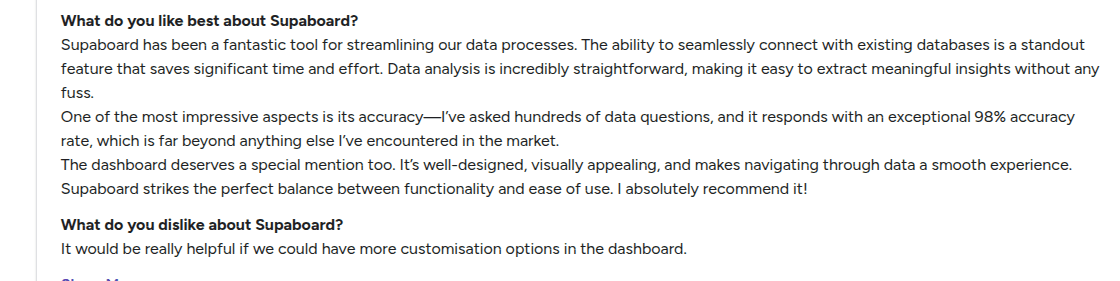
“Feels like a modern alternative to stitching together BI + embedded analytics.”
“Strong balance between flexibility and ease of use.”
“Cuts down engineering time significantly for embedded analytics.”
Key features
Unified BI + embedded analytics in one platform
Secure multi-tenant embedding out of the box
AI-driven querying and insight generation
Designed for both technical and non-technical users
Strong governance for enterprise and healthcare use cases
Metabase
Positioning:
Metabase is a widely adopted open-source BI tool known for its simplicity and quick setup, especially for internal analytics and lightweight reporting.
Best for
Small to mid-sized teams needing fast internal dashboards
Non-technical users exploring data without SQL
Organizations with limited analytics requirements and minimal embedding needs
Pricing
Open-source (free self-hosted option)
Paid cloud and enterprise plans at a lower price point than most enterprise BI tools
Cost-effective for internal BI, less so when scaling customer-facing analytics
What users say
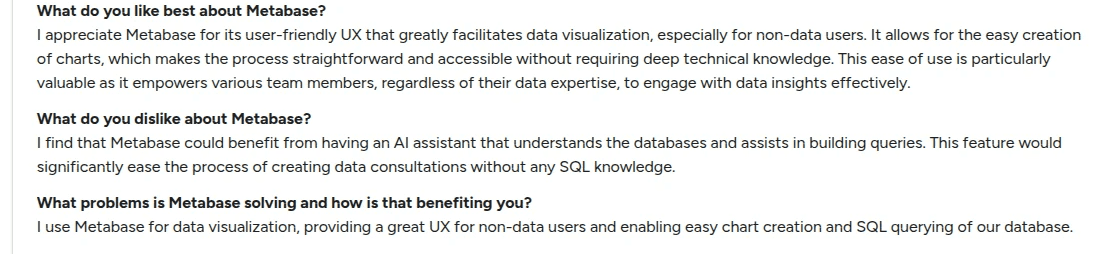
“Very easy to get started.”
“Great for internal dashboards, but we outgrew it.”
“Embedding works, but customization is limited.”
Key limitations
Limited advanced embedding and white-labeling
Weak multi-tenant analytics support
Not designed as a full omni or customer analytics platform
ThoughtSpot
Positioning:
ThoughtSpot is a search- and AI-first analytics platform built primarily for large enterprises that prioritize natural-language querying and self-service insights at scale.
Best for
enterprises with strong budgets
Business users who prefer search-driven analytics
Organizations with centralized analytics teams and mature data stacks
Pricing
Premium enterprise pricing
Higher total cost of ownership compared to open-source or modern omni platforms
Often requires additional services and setup
What users say
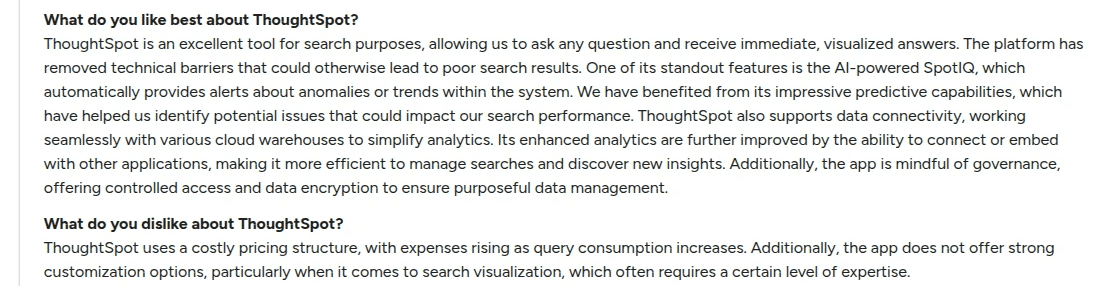
“Search-based analytics is powerful.”
“Very expensive as usage scales.”
“Less flexible for custom embedding use cases.”
Key features
Natural language search over data
Strong AI and enterprise scalability
Optimized for internal self-service, less for embedded SaaS analytics
Redash
Positioning:
SQL-first tools like Redash focus on developer-centric analytics, prioritizing direct query access and lightweight visualization.
Best for
Developers and data analysts comfortable with SQL
Teams needing fast, query-based exploration
Early-stage companies with simple analytics needs
Pricing
Generally low-cost or open-source
Minimal licensing cost, but higher internal maintenance effort
What users say
“Great for quick SQL exploration.”
“Not suitable for non-technical users.”
“Lacks enterprise governance and polish.”
Key limitations
No AI-driven insights
Weak governance and role-based access
Poor support for embedded analytics and multi-tenancy
Not suitable for customer-facing or enterprise environments
Apache Superset vs Omni Analytics Platforms: Quick Comparison
Capability | Apache Superset | Omni Analytics Platforms |
|---|---|---|
Internal BI | ✅ | ✅ |
Embedded analytics | Limited | Strong |
Multi-tenancy | Complex | Native |
AI insights | ❌ | ✅ |
Time to scale | Slow | Faster |
Summary: Apache Superset delivers solid internal BI, but omni analytics platforms provide clear advantages in embedded analytics, multi-tenant isolation, AI-powered insights, and enterprise scalability.
For example, SaaS teams often struggle to expose customer-level dashboards in Apache Superset without building custom authentication, row-level security, and embedding workflows, challenges documented in Superset’s own security and embedding guidelines.
Who Should Consider Moving Beyond Apache Superset?
Organizations should consider moving beyond Apache Superset when analytics needs exceed basic dashboarding and SQL-based exploration.
Superset may not be the right fit if you:
Lack dedicated data engineering or DevOps resources
Need AI-driven or advanced analytics capabilities
Serve non-technical users who require no-code self-service reporting
Rely on pixel-perfect, print-ready compliance or financial reports
Require enterprise-grade support, SLAs, and managed cloud deployments
Build customer-facing or embedded analytics products
In these scenarios, omni analytics platforms typically deliver faster time-to-value and lower operational overhead.
Explore more perspectives on embedded analytics on the
Supaboard blog.
Final Thoughts: Is Apache Superset Still the Right Choice in 2026?
Apache Superset remains a strong option for internal BI and analyst-driven workflows, particularly for technically mature teams that value open-source flexibility.
However, analytics in 2026 extends far beyond internal reporting. Organizations increasingly require embedded analytics, self-service BI, AI-assisted insights, and multi-tenant scalability. Omni analytics platforms address these needs out of the box, reducing tooling sprawl and engineering complexity.
Ultimately, the right choice depends on who your users are, how analytics is consumed, and how quickly you need to scale.
Frequently Asked Questions
What is an omni alternative to Apache Superset?
An omni alternative to Apache Superset is an analytics platform that combines BI, embedded analytics, multi-tenant security, self-service BI, and AI-powered insights in a single, scalable system.
Is Apache Superset suitable for embedded analytics?
Apache Superset can support embedded analytics, but it typically requires custom engineering for authentication, security, and multi-tenancy. Many teams prefer omni platforms with native embedding.
How does Apache Superset compare to Metabase?
Superset is more flexible and SQL-centric, while Metabase is easier for non-technical users. Both tools have limitations for enterprise-grade embedded analytics and AI-driven insights.
When should teams move away from Apache Superset?
Teams often move away when they need customer-facing dashboards, pixel-perfect reporting, AI-powered analytics, enterprise SLAs, or faster time-to-value.
Are omni analytics platforms better for SaaS products?
Yes. Omni analytics platforms are generally better suited for SaaS products due to native embedding, multi-tenant security, white-labeling, and scalability.
For more answers, visit the
Supaboard FAQs.
You can also explore pricing and deployment options here