

How Generative AI Is Transforming Business Intelligence
Discover how generative business intelligence uses AI to deliver real-time insights, natural language analytics, and faster decision-making.

Introduction: Why Business Intelligence Needs a New Approach
Every business today runs on data. Sales numbers, customer behavior, marketing performance, website traffic, and financial records are generated every second. Companies invest heavily in collecting this data, but many still struggle to use it effectively.
The main problem is not data availability. The problem is speed and understanding.
Traditional business intelligence tools often require technical knowledge, manual dashboards, and long reporting cycles. This slows decision-making and creates dependency on analysts.
Generative business intelligence changes this model. It uses artificial intelligence to help users ask questions in natural language and receive instant, meaningful insights. Analytics becomes faster, simpler, and accessible to everyone.
What Is Generative AI and Why It Matters in Analytics
Generative AI is a form of artificial intelligence that can create original content such as text, summaries, explanations, and visual outputs based on learned patterns from data.
Instead of following fixed instructions, it understands context and intent.
In business analytics, this means AI can:
Understand business questions
Analyze multiple data sources
Generate explanations automatically
Present insights in human language
This makes Generative AI ideal for decision-support systems.
Rather than showing only numbers, it explains what those numbers mean and how they affect business outcomes.
What Is Generative Business Intelligence
Generative Business Intelligence (Generative BI) is the next evolution of analytics where artificial intelligence doesn’t just visualize data, it actively creates insights, dashboards, and explanations automatically.
Traditional BI tools require users to:
build dashboards manually,
write SQL queries,
or depend on analysts for reporting.
In contrast, generative business intelligence platforms allow users to simply describe what they want in natural language, such as:
“Show revenue trends by region and explain performance changes.”
The system then:
generates dashboards,
analyzes patterns,
identifies anomalies,
and explains insights in plain language.
This shift transforms BI from a technical workflow into a conversational experience powered by Generative AI for business intelligence.
Simple Example: Traditional BI vs Generative BI
Let’s understand the difference with an easy real-life example.
Scenario: Sales Performance Review
A regional manager wants to understand why revenue decreased last month. In a traditional BI process, the manager needs to open multiple dashboards, apply filters for region and time, compare different charts, download reports, and then manually analyze the data to find the reason behind the drop. This process usually takes around 1–2 hours.
With Generative BI, the process is much simpler. The manager just asks, “Why did revenue fall in North India last month?” The AI quickly responds that revenue dropped by 9% due to lower customer retention, delayed shipments in two major cities, and a 15% reduction in marketing spending. The answer is clear and takes only about 30 seconds.
This example shows how Generative BI makes data analysis faster, simpler, and easier to understand compared to traditional BI.
Limitations of Traditional Business Intelligence Platforms
Traditional BI tools have supported businesses for many years, but they struggle to meet the needs of modern, fast-changing environments. As companies generate more data and require quicker insights, these platforms often become slow, complex, and difficult for non-technical users to rely on.
Key Limitations
Requires technical skills like SQL
Heavy dependence on analysts
Static dashboards
Slow report generation
Limited personalization
Manual interpretation
These tools work well for structured reporting but often fail when users need quick answers or flexible data exploration. As business environments become more dynamic, these limitations can reduce overall competitiveness.
How Generative AI Is Transforming Business Intelligence
Traditional BI tools focus on reporting past data. Generative AI introduces intelligence that actively collaborates with users.
Traditional BI | Generative BI |
|---|---|
Manual dashboard creation | Dashboards generated by description |
SQL or analyst dependency | Natural language queries |
Static reports | Dynamic AI-generated insights |
Data interpretation required | Automated explanations |
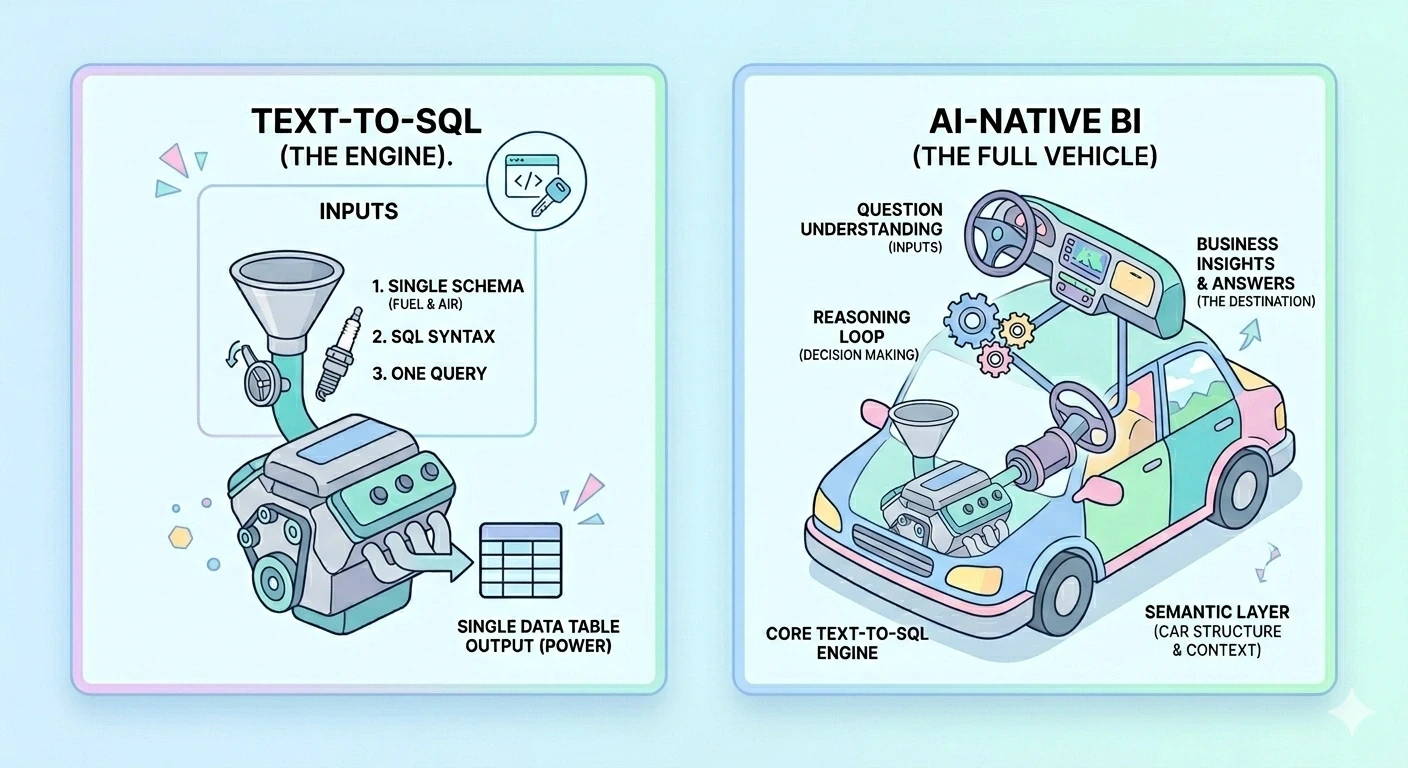
An AI-native business intelligence platform eliminates technical barriers by allowing business users to explore data conversationally.
Instead of asking “How do I build this chart?”, users ask:
“Why did conversions drop last month?”
The AI analyzes datasets, identifies drivers, and generates actionable insights instantly.
Traditional BI vs Generative BI Comparison
Feature | Traditional BI | Generative BI |
|---|---|---|
Interaction | Manual dashboards | Conversational |
Query Method | SQL & filters | |
Reporting | Manual | Automated |
Insights | User-generated | AI-generated |
Accessibility | Technical users | All users |
Speed | Slow | Real-time |
Personalization | Limited | High |
Benefits of Generative Business Intelligence
Generative Business Intelligence helps organizations use data more easily and make faster decisions. By using AI to explain insights in simple language, it removes technical complexity and allows more employees to access and understand data, improving overall efficiency and supporting smarter business strategies.
Major Advantages
Democratizes data access
Improves decision speed
Reduces operational workload
Enhances insight accuracy
Supports strategic planning
Increases data adoption
By lowering technical barriers, generative BI helps organizations build a stronger data-driven culture.
Challenges and Risks of AI-Powered BI
AI-powered Business Intelligence offers many benefits, but it also comes with certain risks that organizations must carefully manage. Since AI systems rely heavily on data and automation, businesses need proper controls to ensure accuracy, security, and responsible usage while making important decisions.
Key Challenges
Data privacy concerns
Risk of inaccurate AI outputs
Dependence on data quality
Integration complexity
Need for governance frameworks
Organizations must combine AI automation with human validation and strong security controls to ensure reliable results.
The Future of Business Intelligence with Generative AI
The next phase of BI evolution will focus on autonomy and integration.
Future systems will:
Detect anomalies automatically
Trigger alerts proactively
Recommend actions
Integrate across CRM, ERP, and finance tools
Support voice-based analytics
BI platforms will evolve from reporting tools into intelligent decision systems.
How Supaboard Helps You Turn Questions Into Business Decisions
Supaboard is built for teams that want fast, clear, and reliable insights without dealing with complex dashboards or technical setup. It uses generative AI to transform raw business data into meaningful answers through simple, natural language queries.
Instead of spending hours building reports or waiting for analysts, users can directly ask questions like “Why is customer churn increasing?” or “Which campaign is giving the highest ROI?” and receive instant, data-backed explanations.
Why Teams Choose Supaboard
Ask business questions in plain English
Get real-time, AI-generated insights
Create dashboards automatically
Connect multiple data sources easily
Reduce dependence on technical teams
Make faster, more confident decisions
With Supaboard, analytics becomes a daily business tool, not a technical bottleneck. It empowers founders, managers, and teams to act on data with clarity and speed.
How to Generate Dashboards Using AI Without SQL or Manual Reporting
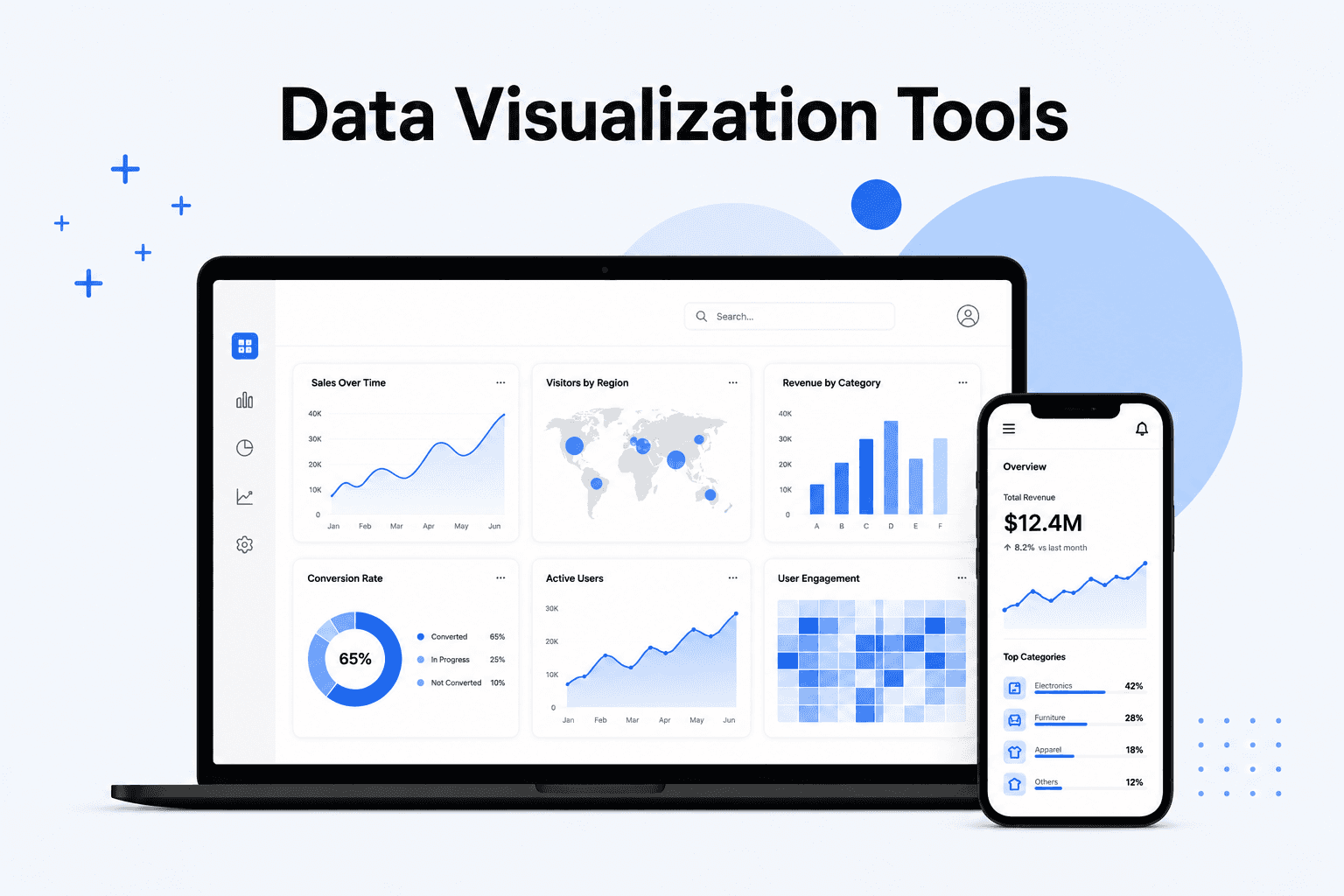
Modern businesses no longer need technical expertise or complex reporting workflows to understand their data. With generative business intelligence, users can create powerful dashboards simply by describing what they want to see in natural language.
Instead of writing SQL queries or manually configuring charts, AI interprets user intent, selects relevant metrics, and automatically builds visualizations that highlight key trends and performance insights. Platforms like Supaboard make this process even simpler by allowing teams to generate dashboards instantly and receive AI-generated explanations alongside their data.
This reduces time spent on manual analysis while improving decision speed. By removing technical barriers, Supaboard helps organizations transform raw data into clear, actionable insights that drive smarter business decisions and faster growth.
Responsibilities of Developers Using Generative AI in Real-World Applications
Developers using generative AI are responsible for ensuring that AI systems produce accurate, safe, and reliable outputs. This starts with validating generated content and continuously testing models to reduce errors.
A key responsibility is ensuring ethical practices, which includes avoiding harmful use cases and setting clear boundaries for AI behavior. Developers must also focus on mitigating biases by carefully selecting and refining training data to prevent unfair or misleading outputs.
Another critical responsibility is maintaining transparency in AI outputs. Users should be aware when content is AI-generated and understand its limitations. In addition, developers are responsible for protecting user data, following compliance standards, and keeping human oversight in place for important decisions.
Frequently Asked Questions (FAQs)
1. What is generative business intelligence?
Generative business intelligence uses generative AI and large language models to analyze business data, generate insights, create reports, and explain trends through natural language interfaces. It helps users understand complex information without technical skills or manual dashboard analysis.
2. Is generative BI suitable for small businesses?
Yes, generative BI is highly suitable for small businesses because cloud-based platforms offer affordable pricing, easy setup, and automation. These tools help startups access advanced analytics, monitor performance, and make data-driven decisions without hiring large analytics teams.
3. Does generative BI replace data analysts?
No, generative BI does not replace data analysts. Instead, it automates repetitive tasks like reporting and basic analysis. Analysts remain essential for data strategy, quality control, advanced modeling, and ensuring that business insights are accurate and reliable.
4. How accurate is generative BI?
The accuracy of generative BI depends on data quality, system integration, and model training. When supported by clean datasets, proper validation processes, and governance policies, generative BI can deliver highly reliable insights for business decision-making.
5. What industries benefit most from generative BI?
Industries such as retail, finance, healthcare, SaaS, logistics, and manufacturing benefit most from generative BI due to high data volumes and complex operations. These sectors use AI-driven analytics to improve forecasting, optimize costs, and enhance customer experiences.
What are the key responsibilities of developers using generative AI?
Developers using generative AI are responsible for building systems that are accurate, ethical, and trustworthy. This includes validating AI-generated outputs, ensuring ethical practices, mitigating biases in training data and responses, and maintaining transparency in how AI systems generate results.
They must also protect user data, follow compliance standards, continuously monitor AI performance, and keep human oversight in place, especially for critical business decisions. The goal is not just automation, but responsible and reliable AI usage that businesses can depend on.
Final Thoughts
Generative business intelligence is transforming analytics from a technical function into a strategic advantage. Instead of struggling with dashboards and reports, teams can now interact with data naturally, receive instant explanations, and make faster decisions.
This shift improves productivity, transparency, and business agility. Companies that adopt generative BI early will not only work smarter but also build sustainable competitive advantages in a data-driven economy.