

AI Predictive Analytics in Healthcare: How Data Is Transforming Patient Care
Predictive analytics is no longer a concept of the future; it is revolutionizing decision-making for hospitals, doctors, and care teams. Healthcare systems are evolving, transitioning from addressing issues post-occurrence to preventing them. This transformation is driven by AI, machine learning, and real-time patient data, with an emphasis now placed on delivering personalized care. Today, AI predictive analytics in healthcare can spot risks earlier. They help reduce readmissions, prevent complications, and provide safer, more efficient patient care.


What Is AI Predictive Analytics in Healthcare?
AI predictive analytics in healthcare is the application of artificial intelligence, machine learning, and advanced statistical models to large volumes of patient data. It forecasts potential health events such as disease onset, complications, hospital readmissions, and clinical deterioration — often days or weeks in advance.
By analyzing electronic health records (EHRs), laboratory results, medical imaging, vital signs, clinical notes, wearable device data, and genomic information, these systems uncover hidden patterns that human clinicians might miss. In 2026, predictive analytics has moved from pilot projects to mainstream adoption, helping hospitals transition from reactive treatment (treating problems after they appear) to proactive prevention (stopping issues before they escalate).
Recent industry reports show hospitals implementing mature predictive analytics solutions have achieved 15-50% reductions in avoidable readmissions, earlier sepsis detection, and substantial cost savings while improving patient survival rates.
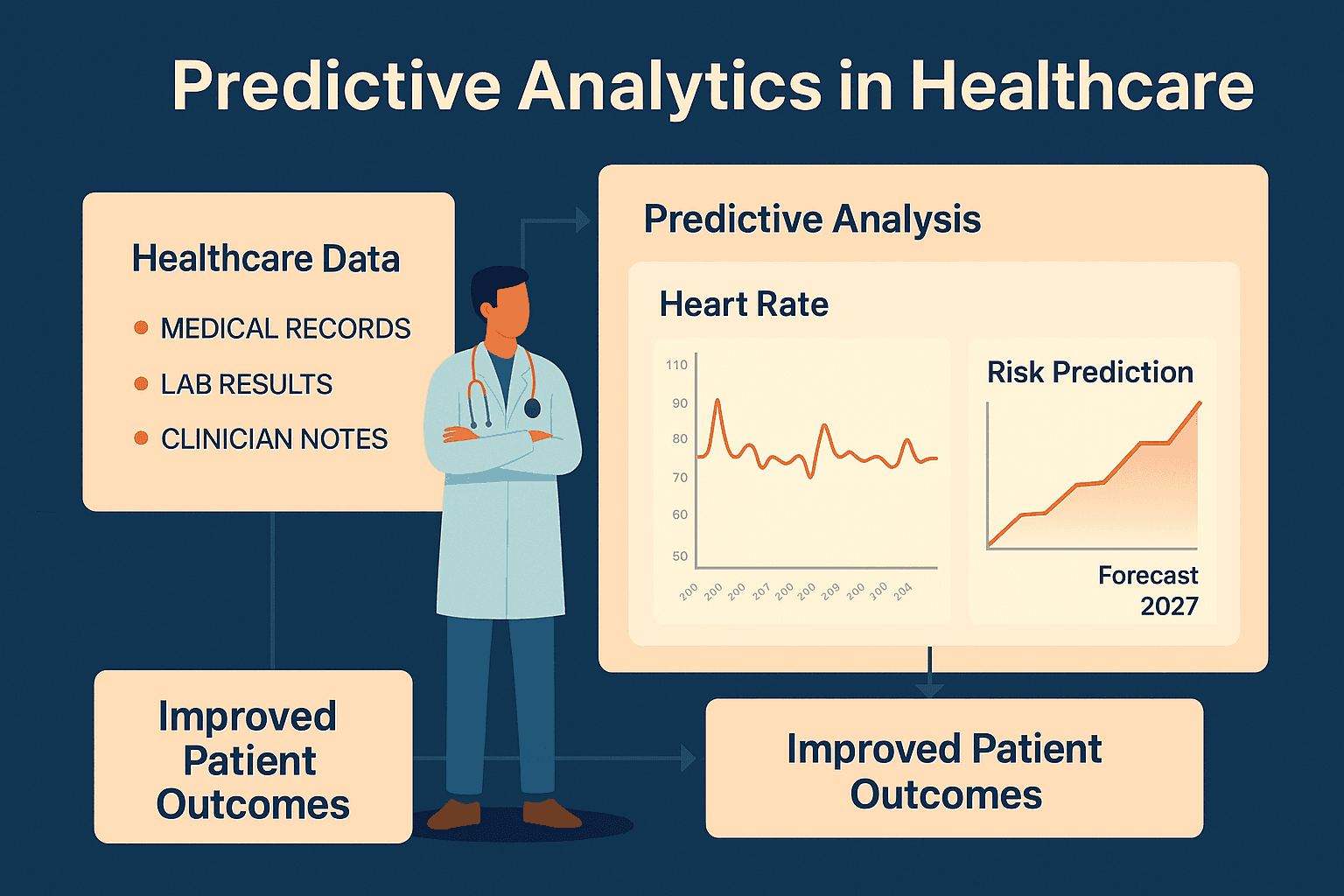
How Predictive Analytics Works in Modern Healthcare Systems
Predictive analytics follows a systematic, iterative process:
Data Collection: Aggregating structured and unstructured data from multiple sources including EHRs, IoT wearables, labs, and patient-reported outcomes.
Data Processing & Integration: Cleaning inconsistent data, using FHIR standards for interoperability, and applying Natural Language Processing (NLP) to extract insights from physician notes.
Model Development: Training advanced algorithms such as XGBoost, Random Forests, deep neural networks, and multimodal large language models on historical patient data.
Real-Time Prediction: Generating risk scores, early warning alerts, and personalized recommendations delivered directly into clinical workflows.
Feedback Loop: Models continuously learn and refine themselves while maintaining explainability for clinician trust.
Before vs After AI Predictive Analytics
Aspect | Traditional Care | AI Predictive Care (2026) |
|---|---|---|
Timing of Intervention | After symptoms worsen | Hours or days in advance |
Data Utilization | Manual, limited chart reviews | Real-time, comprehensive historical analysis |
Treatment Approach | Standardized, one-size-fits-all | Highly personalized using genomics & lifestyle |
Readmission Rates | Higher | 15-50% lower |
Resource Management | Reactive | Accurate forecasting & optimization |
Key Benefits of Predictive Analytics in Healthcare
1. Early Disease Detection and Prevention AI can detect subtle physiological changes indicating sepsis, heart failure exacerbation, or cancer recurrence long before visible symptoms, enabling timely interventions that significantly lower mortality.
2. Reduced Hospital Readmissions Advanced models evaluate post-discharge risks using medication history, social factors, and follow-up compliance, allowing care teams to prioritize high-risk patients for telemonitoring and home visits.
3. Enhanced Operational Efficiency Hospitals can accurately predict daily patient inflow, ICU bed demand, staffing requirements, and equipment needs — reducing overcrowding and emergency diversions.
4. Personalized and Precision Medicine By combining clinical data with genetic profiles, predictive tools help design treatment plans tailored to individual patients, improving efficacy while minimizing side effects.
5. Significant Cost Savings and Better Patient Experience Preventing complications and shortening hospital stays leads to lower healthcare costs and higher patient satisfaction scores.
Real-World Case Studies and Success Stories
Johns Hopkins TREWS System (Sepsis Detection) Johns Hopkins Hospital’s Targeted Real-Time Early Warning System (TREWS) identifies sepsis several hours earlier than conventional methods. Large-scale implementations have shown meaningful reductions in mortality and hospital length of stay.
Cleveland Clinic Predictive Models Cleveland Clinic uses machine learning platforms for heart failure readmission prediction and sepsis management, resulting in fewer false alarms and faster clinical response times.
NYU Langone’s NYUTron This innovative large language model reads unstructured clinical notes and predicts 30-day readmissions and other adverse events with high accuracy, outperforming many traditional rule-based systems.
Several hospital chains in India are now piloting similar AI tools focused on high-burden conditions like diabetes, hypertension, and maternal health in both urban and rural settings
Major Challenges and Limitations
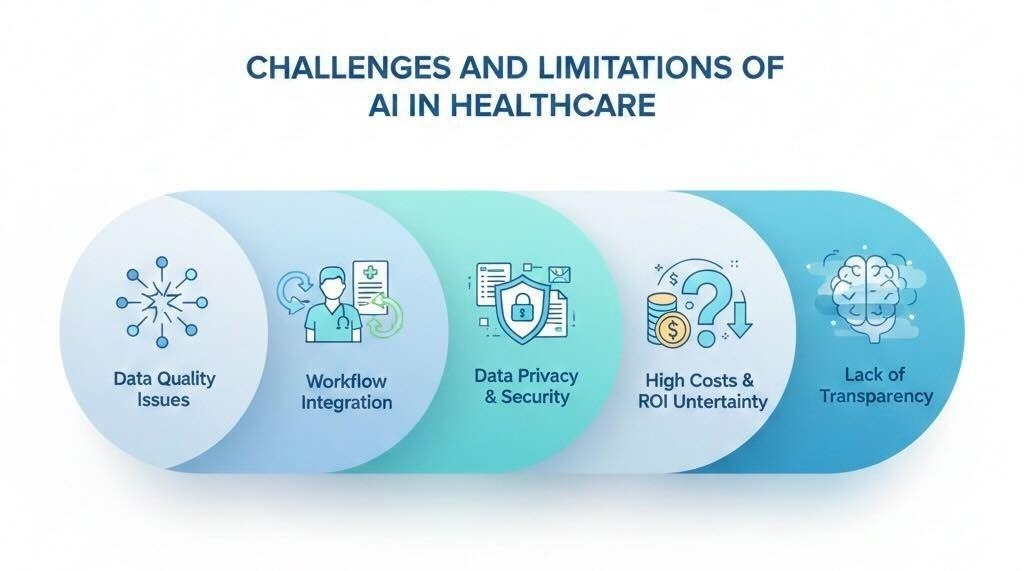
Despite its potential, AI predictive analytics faces several hurdles:
Data Quality and Algorithmic Bias — Incomplete or unrepresentative datasets can produce inaccurate or unfair predictions, especially across diverse populations.
Seamless Workflow Integration — Alert fatigue and lack of proper EHR integration often reduce clinician adoption.
Privacy, Security & Compliance — Strict adherence to HIPAA, GDPR, and India’s Digital Personal Data Protection (DPDP) Act is mandatory amid growing cyber threats.
High Implementation Costs — Significant investment in infrastructure, skilled talent, and training is required, though most organizations see positive ROI within 12–24 months.
Lack of Transparency (Black Box Issue) — Clinicians need explainable AI (XAI) to understand and trust recommendations.
Regulatory and Ethical Concerns — Ensuring fairness, accountability, and equitable access remains a key priority.
Future Trends in AI Predictive Analytics for 2026 and Beyond
Agentic & Generative AI — Autonomous AI agents that not only predict but also suggest and coordinate care actions.
Multimodal Models — Combining text, imaging, genomics, and sensor data for richer predictions.
Continuous Remote Monitoring — Wearables and IoT devices feeding real-time data into predictive platforms.
Genomics-Enabled Long-Term Risk Prediction — Forecasting disease risk years ahead for preventive strategies.
Hospital Digital Twins — Virtual replicas of hospitals for testing operational changes.
Bias-Mitigated & Fully Explainable Models — Building greater trust among clinicians and regulators.
In India, growth will be driven by affordable cloud AI, integration with Ayushman Bharat Digital Mission, and mobile-first solutions reaching rural populations.
US vs India: Opportunities and Challenges
United States: High adoption driven by readmission penalties, aging population, and advanced infrastructure. Over 70% of large hospitals now use some form of predictive analytics within their EHR systems.
India: Challenges include specialist shortages, overloaded tertiary hospitals, and vast rural populations with limited access. However, India benefits from huge volumes of diverse patient data and a rapidly expanding AI market. Cost-effective, scalable solutions combined with national digital health initiatives are accelerating adoption for chronic disease management and operational efficiency.
Implementation: Where Predictive Analytics Is Used Today
Major Electronic Health Record platforms (Epic, Cerner, and Indian solutions)
Clinical Decision Support Systems (CDSS)
Population Health Management tools
Remote Patient Monitoring & Telemedicine platforms
Central Hospital Command Centers
Frequently Asked Questions (FAQ)
1. What is AI predictive analytics in healthcare?
It is the use of AI and machine learning to analyze patient data and predict future health risks, enabling proactive instead of reactive care.
2. How does predictive analytics reduce hospital readmissions?
It identifies high-risk patients using multiple data points and supports targeted interventions, achieving 15-50% reductions in many hospitals.
3. What are the best real-world examples of predictive analytics in hospitals?
Leading examples include Johns Hopkins TREWS for sepsis, Cleveland Clinic’s heart failure models, and NYU Langone’s NYUTron for readmission prediction.
4. What are the main challenges of using AI predictive analytics in healthcare?
Key challenges are data quality & bias, integration difficulties, privacy concerns, high costs, and the need for transparent, explainable models.
5. How is AI predictive analytics being used in India in 2026?
It is helping manage chronic diseases, optimize resources in busy hospitals, expand care to rural areas through telemedicine, and support national digital health programs.
Conclusion
AI predictive analytics in healthcare has become a game-changing force in 2026. By turning vast amounts of data into actionable foresight, it enables earlier interventions, personalized treatments, smarter operations, and better patient outcomes across the globe.
For healthcare providers in India and worldwide, the journey toward fully proactive care requires focus on data quality, ethical implementation, clinician collaboration, and continuous improvement. Organizations that embrace this technology thoughtfully will be best positioned to deliver high-quality, efficient, and patient-centered care in the coming years.
Ready to explore predictive analytics for your hospital or clinic? Drop your questions or specific requirements in the comments below. For customized insights tailored to the Indian healthcare ecosystem, feel free to reach out.
Related Blogs: