

Gabriella.pl

How Gabriella.pl built one source of truth for marketing with Supaboard
What we did
4 → 1
Meta, LinkedIn, Google Ads & Shopify unified into one source of truth
Live
Blended CAC & ROAS by channel, replacing week-late spreadsheets
Mid-flight
Budget shifts while campaigns are still spending
"The biggest change wasn't a metric. It was that marketing stopped arguing with itself about which platform's numbers to believe."
Performance marketing · Ecommerce
Meta Ads · LinkedIn Ads · Google Ads · Shopify
Gabriella.pl runs performance marketing across Meta, LinkedIn, Google Ads, and Shopify — and for a long time, each platform told its own version of the truth. Meta claimed credit for conversions Google also claimed. LinkedIn reported cost-per-lead in isolation from what actually closed.
Shopify showed revenue without knowing which campaign delivered the customer. With Supaboard, the team pulled all four into a single unified source of truth. The trainable agent learned their campaign taxonomy, their attribution logic, and the way the team actually thinks about funnel stages.

Four platforms, four versions of the truth
Before Supaboard, marketing performance lived in four disconnected tools — and reconciling them was a manual job that ran every single week:
Conversions double-counted: Meta claimed credit for conversions Google also claimed, so no single number could be trusted on its own.
Leads with no outcome: LinkedIn reported cost-per-lead in isolation from what actually closed downstream in Shopify.
Revenue with no source: Shopify showed revenue without knowing which campaign delivered the customer.
Always a week late: The team stitched it together in spreadsheets — and by the time the picture came together, the campaigns it described had already finished spending.
One unified source of truth
Gabriella.pl integrated their four platforms into Supaboard, turning four dashboards in four tabs into a single conversation. It changed how the team plans and reviews performance:
One trained agent: Supaboard learned Gabriella.pl's campaign taxonomy, attribution logic, and funnel-stage definitions.
Blended, deduplicated metrics: Blended CAC and ROAS by channel, with shared conversions reconciled instead of double-claimed.
Ask in plain English: "What's our blended CAC by channel this week?" · "Which LinkedIn campaigns are driving Shopify revenue, not just clicks?" · "Where should we shift budget next month?"
Attribution that runs across platforms, not inside them
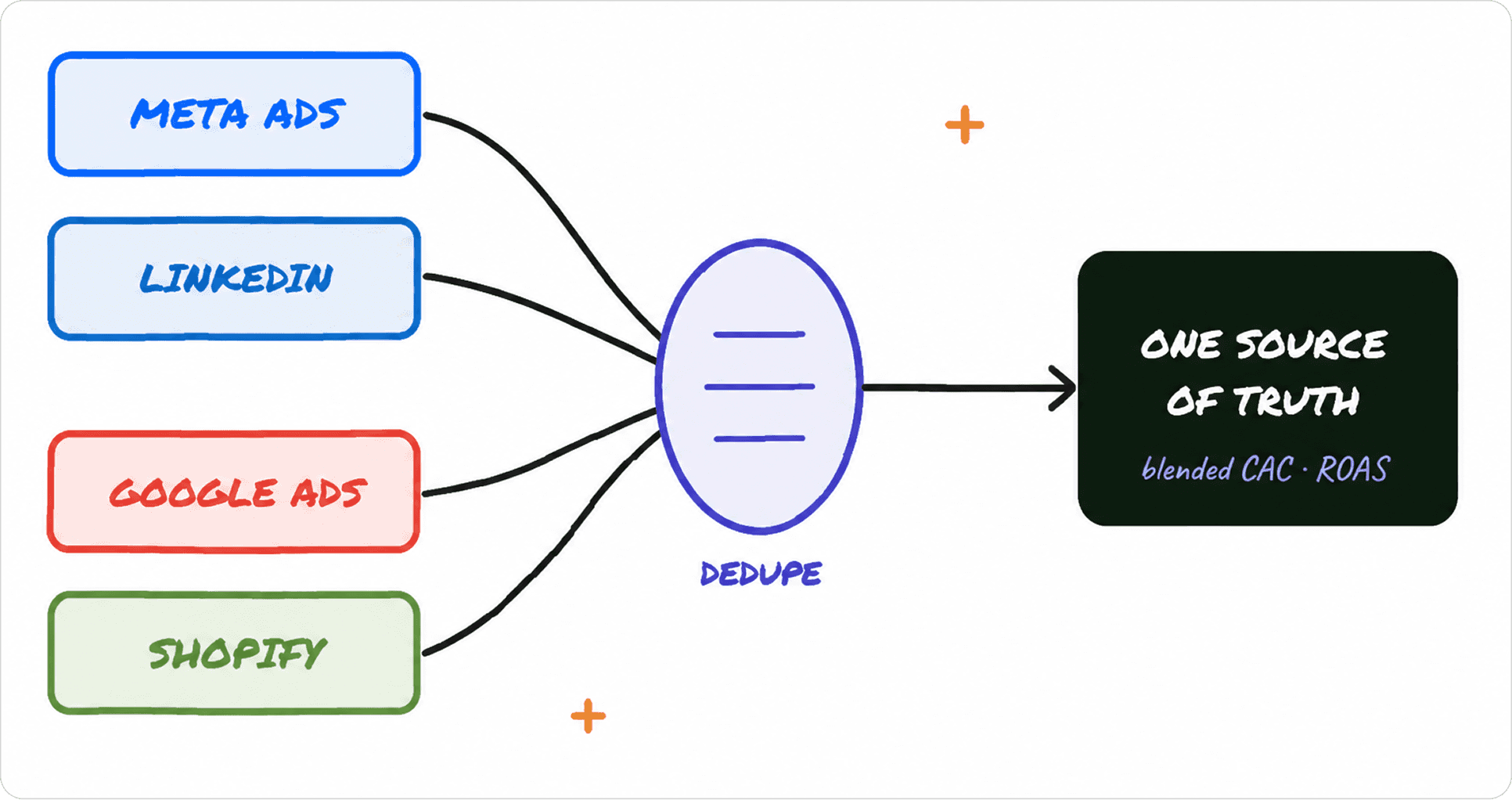
Supaboard maps attribution across Meta, LinkedIn, Google Ads, and Shopify at once — so a conversion claimed by two platforms is counted once, and every channel is judged on the revenue it actually drove, not the credit it claims for itself.
For example, LinkedIn carries the highest cost-per-lead but the best close rate — funding pipeline, not clicks. Seen in isolation it looked expensive. Seen blended, it was the team's strongest channel.
Shifting budget while campaigns are still live
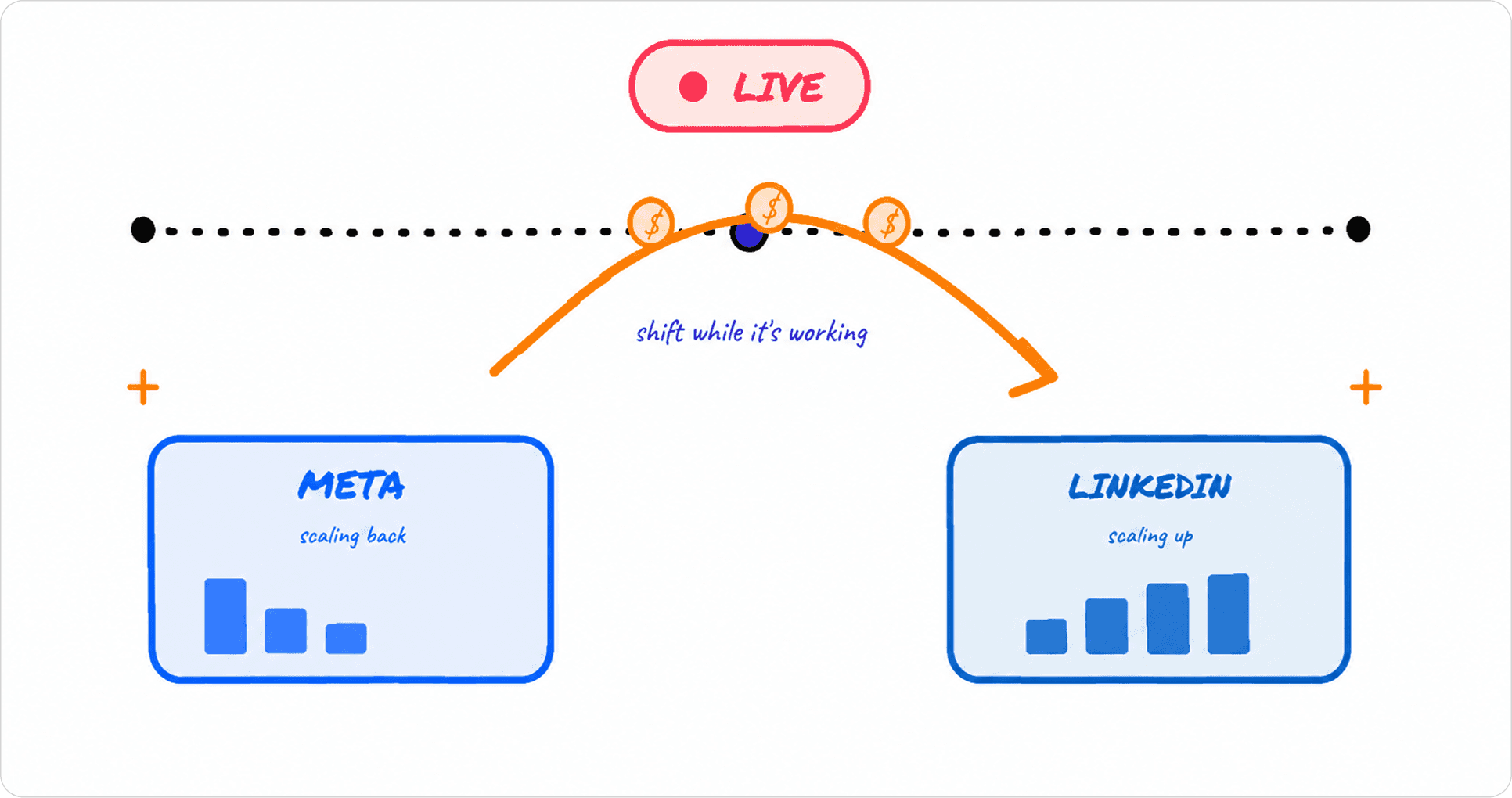
Because performance is blended and live, the team can move spend before a campaign finishes — not a week after it's done. Campaign planning happens against blended performance, not siloed reports.
Budget moves toward whatever is working this week, while it's still working — so spend follows results in real time instead of chasing last month's report.
Supaboard's impact on Gabriella.pl's marketing
Gabriella.pl now runs marketing on Supaboard. The change shows up everywhere the team makes a decision:
One source of truth: Attribution debates happen against one set of numbers everyone trusts, not four that disagree.
Decisions, not data pulls: The questions stopped being about pulling data and started being about deciding.
Faster, calmer planning: Weekly reviews and monthly planning run in one place, with no spreadsheet to rebuild.
The biggest change wasn't a metric — it was that marketing stopped arguing with itself about which platform's numbers to believe.